
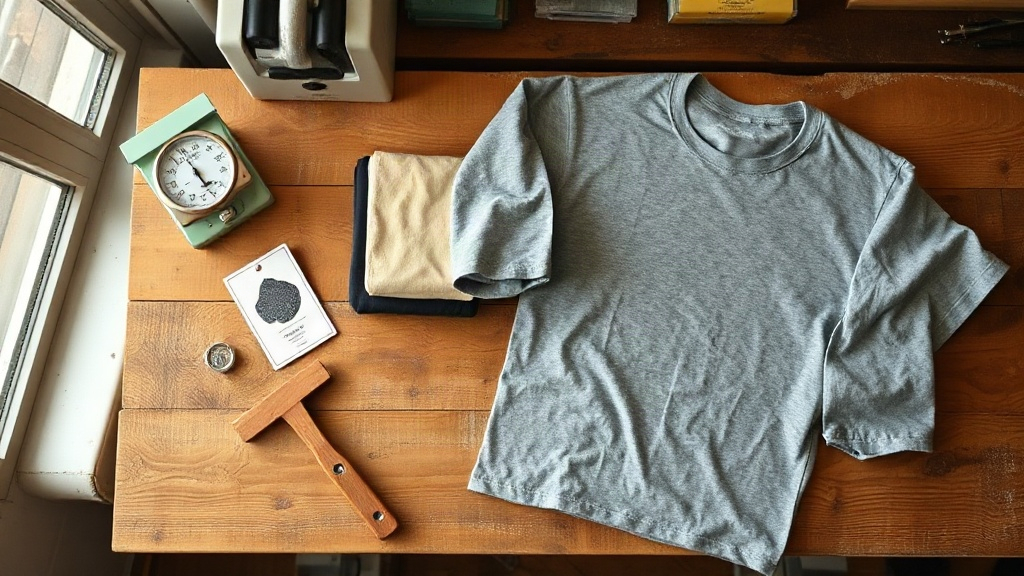
I have pulled squeegees for eleven years and printed somewhere north of 400,000 shirts. Most of the complaints I hear from customers do not start with my ink work. They start with the blank. A Custom Premium Tee is not premium because a website says so in the product title. It is premium because the fabric, the seams, and the print method survive real life: gym bags, hot dryers, repeated wear, and the friend who asks where you got it.
This guide is what I tell clients before they spend a dollar on a run of 200 or 2,000 shirts. No fluff, no vendor talking points, just the variables that actually show up on a wash test.
What Separates a Premium Blank From a Cheap One
Walk into any wholesale catalog and you will see shirts priced from $2.10 to $9.50 at similar quantities. The gap is not marketing. It comes down to four physical differences you can verify with your hands.
Fabric weight and yarn count
Standard blanks run around 5.3 oz per square yard. Premium ringspun cotton typically lands between 6.0 and 6.5 oz. That extra weight is not just about warmth. Heavier fabric drapes better, resists the see-through effect under bright light, and holds shape through more wash cycles. Yarn count matters just as much: finer, longer-staple yarns create a smoother surface, which means finer halftone detail in your print.
Ringspun versus open-end cotton
Open-end yarn is cheaper to produce and feels rougher against skin. Ringspun cotton goes through an extra spinning step that aligns the fibers and removes short staple pieces. The result is a softer hand feel and less pilling over time. If a supplier cannot tell you which one they use, assume open-end.
Stitching and side seams
Turn the shirt inside out. Look at the shoulder seam. A taped neck and shoulder seam prevents the dreaded stretch-out after a few wears. Look at the hem: double-needle stitching should be even, with no skipped stitches. Side-seamed construction (rather than tubular) gives a fitted shape and, importantly, gives your printer a flat surface for side prints.
Shrinkage and pre-shrinking
Unpre-shrunk cotton can lose 5 to 7 percent of its length in the first hot wash. Pre-shrunk or garment-dyed blanks lose closer to 2 to 3 percent. If you are printing a design with a tight registration near the hem, that difference is the gap between a clean print and a cracked one.
Why the Print Method Changes Everything
A great blank with the wrong decoration is still a bad shirt. Here is how the main methods behave on premium cotton.
- Plastisol screen print: Durable, opaque, and the industry standard for large runs. On a 6.5 oz ringspun tee it sits on top of the fabric, so it feels slightly raised. Fine for bold graphics, less ideal for ultra-soft hand feel.
- Water-based and discharge print: The ink dyes the fabric rather than coating it. On a Custom Premium Tee made from 100 percent ringspun cotton, discharge printing produces a print you can barely feel. It also ages gracefully because there is no plastic layer to crack.
- DTG (direct to garment): Best for small runs and photographic detail. It performs noticeably better on 100 percent cotton than on poly blends, where the ink can look dull.
- Embroidery: Adds perceived value fast. A left-chest logo on a heavyweight tee reads as a uniform or a brand piece, not a giveaway.
The Mistakes I See Buyers Make Most Often
After hundreds of orders, the same three errors come up again and again.
- Choosing blanks by price only. Saving $1.20 per shirt sounds smart until the first wash cycle turns the neckline into a wavy mess. Reorders cost more than the original savings.
- Ignoring the fabric-to-ink match. Discharge ink on a 50/50 poly blend will not discharge. It just prints gray and looks washed out. Match the method to the fiber content before you approve the sample.
- Skipping a wash test. Ask your printer for a printed sample, then wash it three times on warm and tumble dry. If the print cracks or the shirt shrinks two inches, you found out for the price of one shirt instead of 500.
How to Brief Your Printer So the Run Goes Right
Good print shops are not mind readers. The briefs that produce the best results include five things: exact blank style number, desired fabric weight and fiber content, print placement with measurements (not "center chest"), Pantone colors or a vector file, and a deadline that accounts for a sample approval round. If you are sourcing blanks yourself from a supplier like Smart Blanks USA, confirm the style number matches what your printer has in their price list. Mismatched style numbers are the single most common cause of a reprint.
Placement measurements that actually work
For a standard left-chest logo, place the top of the design 3.5 to 4 inches below the shoulder seam and 3 to 3.5 inches from the center. For a full front print, the top of the design should sit 2.5 to 3 inches below the collar. These numbers hold across most adult unisex sizes, though you should scale down roughly 10 percent for youth sizing.
Pricing Reality: What Premium Actually Costs
At 100 pieces, expect blank cost between $4.50 and $7.00 for a true premium ringspun tee, plus $1.50 to $3.00 per print location depending on colors and method. At 500 pieces those numbers drop meaningfully. The trap is buying a cheap blank and a premium print: you pay premium labor on a shirt that will not last. The reverse, a premium blank with a cheap one-color print, usually delivers better perceived value because the garment itself feels good in the hand.
Frequently Asked Questions
How many washes should a custom premium tee survive before the print fades?
A properly cured plastisol print on quality ringspun cotton should hold up for 50 or more home wash cycles with minimal fading. Water-based and discharge prints fade more gradually and often look intentionally vintage after 30 washes. Wash inside out in cold water and skip the dryer to extend both the print and the fabric.
Is 100 percent cotton always better than a cotton-poly blend?
Not always. Cotton wins on softness, printability with discharge inks, and breathability. A 50/50 or tri-blend wins on resistance to shrinking and wrinkle recovery, which matters for uniforms and travel wear. If your design relies on fine detail or a soft hand feel, stay with cotton. If durability and shape retention matter more, a blend is a legitimate choice.
What fabric weight should I pick for a retail-style shirt?
For a shirt people will actually buy and wear, aim for 6.0 to 6.5 oz ringspun cotton. Below 5.5 oz it reads as a promotional giveaway. Above 7 oz it starts to feel heavy and stiff, which limits casual wear. Garment-dyed options in the 6 oz range often feel the most premium because the dye process softens the fabric further.
How do I check blank quality before placing a large order?
Order three sample shirts in the exact style you plan to use. Check the neck seam for taping, weigh the shirt on a kitchen scale against the spec sheet, and run one through three hot washes. If the measurements stay within half an inch and the collar keeps its shape, you have a blank worth scaling.